

I wrote this article for makelife.click, an online community, with a vision to benefit the wellbeing of all. I highly recommend visiting and joining. I hope you find it useful, especially if you are experiencing anxiety or fear about the current state of everything.

I try to use proven theories and science to make sense of any situation that I’m confronted with. At times it’s as simple as 1 + 1 = 2. However, sometimes it’s not straightforward and determining next steps is a leap in the dark. In such situations, it’s hard to determine whether hope should be the guiding basis and the foundation of the virtual structure to be assembled, or rather exhibit fear as a shield that will protect from any possible negative outcome. Science has proven that, in most cases, our natural reaction as beings is to put up a defense and work with fear as its most reliable weapon.
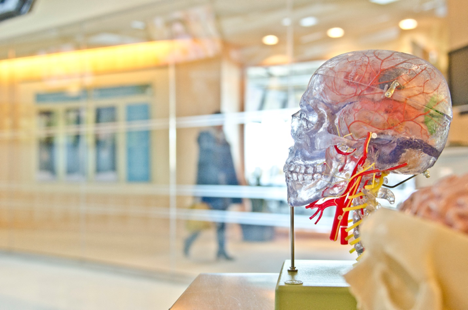
Starting with the anatomy of the human brain, which tells us that in such situations, it’s easier and quicker to be conservative, holding back and guarded vs. analytical, contemplative and reflective because of how the Amygdala and the Prefrontal Cortex sections of our brains have evolved to function over thousands of years, with the Amygdala controlling the former set of feelings and the Prefrontal Cortex handling the latter set. The neuroscience surrounding the aforementioned is fascinating and I recommend reading about it when possible2.
One might ask if it’s possible to get around the default brain functions formed by thousands of years of evolution and interactions with our surroundings as a species. As a follow-up, another point and/or question that might arise is that it’s not only evolution that is behind how we react, but tens of years of societal norms conditioning of a person’s reality and belief systems. My short answer based on my own experiences is YES, it’s possible, depending on the set of tools employed to deal with a given situation.
My set of tools is comprised of, but not limited to, exhibiting gratitude, empathy, compassion, positive outlook on life, and forgiveness. I am not saying that I use all of them at the same time during each and every instance of decision making, but rather I use the set as an imaginary toolbox that I could readily access when I need one or more means to address a situation on hand. I personally have used a combination of those attributes to tackle simple decisions such as being fearful of missing out on something greater, rather than washing the dishes in the kitchen sink, or more complex ones, such as being fearful of not getting a regular paycheck, rather than quitting a job to pursue exploring what my purpose and passions are.
Diving deeper into the latter dilemma, I was programmed both by societal conditioning and the innate brain reactions to never quit a job when you don’t have another lined up. I totally understand the reasoning behind both aspects, but if I am to be honest, I was stuck in a state of misery coupled with a routine that was mundane and unfulfilling. Furthermore, changing jobs is never a guarantee of changing the way a person perceives their outlook on life. I had to make a change and, instead of relying on ‘Fear’ of the known and the unknown, I addressed the situation with ‘Hope’ based on the attributes that I had worked to acquire over a period of time. Reflecting on the situation, I could attest to having a more holistic mindset in general, and a powerful sense of optimism about the future in particular, with the realization that, although it’s a work in progress, most aspects of living are trending for the better.
I came across an interesting narrative in a book5 comparing our own cognitive systems to a piece of software, that with no evaluation, updates, refactoring, and upgrades, it becomes obsolete and unusable after a short while. In the same manner, I think we should always evaluate the way we handle situations, update the set of tools that we rely on to make decisions, refactor the same set of tools for optimal outcomes, and upgrade our view of our surroundings as they change constantly.
A study published in the European Journal of Social Psychology titled ‘The dominance of fear over hope in the life of individuals and collectives’6 has proposed that:
“While there is fear there is mindlessness and misery“
“While there is hope there is rationality and progress“
Reading through the previous paragraphs, it’s evident that I agree wholeheartedly with the proposal of the study. However, I can never say I am immune to fear or that I am hopeful a 100% of the time. I would rather say that I am equipped with means that could assist me when faced with the tribulations and uncertainty of life. It’s a process that has taken time and is always evolving. I am grateful for the journey that got me to this point and for the people that helped me get here. I am empathetic to those who find it hard and at times impossible to change their perspective on things. I have a lot of compassion for people (and others sharing our world with us) in general, and for my family and friends in particular. I try to be an optimist and have a positive outlook on life, even when I am not able to comprehend or understand. Last, but not least, I force myself to choose forgiveness when it’s juxtaposed with judgment.
References:
1 Photo by Aleksandr Ledogorov on Unsplash
2 By Momentous Institute | Oct 15, 2019
3 Photo by jesse orrico on Unsplash
4 Photo by Johnny Cohen on Unsplash